
Because Italy is more than a geographic expression..


Showing posts with label History. Show all posts
Showing posts with label History. Show all posts
Tuesday, October 12, 2010

Monday, September 6, 2010
A Revolutionary Instrument This Piano
Bartolomeo Cristofori. He who invented an instrument we call the piano. Or as he called it, "piano e forte."
How Many Volts?
Alessandro Volta's corrosive invention was the battery.
What, you think the word 'Volt' came out of a Wagner opera?
What, you think the word 'Volt' came out of a Wagner opera?
Seeing Things Better
Prior to the late 13th century, generally, eye glasses came with no arms settling on the bridge of the nose instead. Salvino D'Artmate is credited with having invented the eye glass. Although it has been asserted Alessandro Spina may have in fact been the first to do so.
From Richard D. Drewery., MD:
In 1289 in a manuscript entitled Traite de con uite de la famille, di Popozo wrote: "I am so debilita-ted-by age that without the glasses known as spectacles, I would no longer be able to read or write. These have recently been invented for the benefit of poor old people whose sight has become weak". Thus it appears that the first spectacles were made between 1268 and 1289. In 1306 a monk of Pisa delivered a sermon in which he stated: "It is not yet twenty years since the art of making spectacles, one of the most useful arts on earth, was discovered. 1, myself, have seen and conversed with the man who made them first". The name of the true inventor of eyeglasses remains lost in obscurity.
After this, as is usually the case, many inventors and innovators from other parts of Europe - notably England - improved eye glass wear.
For their part, Italians have remained at the forefront of eye glass technology over time.
As of yet, I only wear sun glasses - another area Italian designers excel in. Actually, I wear Arnette. I have somewhat of a small frame so most sun glasses tend to overwhelm my face (decorated with delicate but distinct features - ahem) but my Arnette's fit perfectly. Not sure where Tommy Arnette was born though.
From Richard D. Drewery., MD:
In 1289 in a manuscript entitled Traite de con uite de la famille, di Popozo wrote: "I am so debilita-ted-by age that without the glasses known as spectacles, I would no longer be able to read or write. These have recently been invented for the benefit of poor old people whose sight has become weak". Thus it appears that the first spectacles were made between 1268 and 1289. In 1306 a monk of Pisa delivered a sermon in which he stated: "It is not yet twenty years since the art of making spectacles, one of the most useful arts on earth, was discovered. 1, myself, have seen and conversed with the man who made them first". The name of the true inventor of eyeglasses remains lost in obscurity.
After this, as is usually the case, many inventors and innovators from other parts of Europe - notably England - improved eye glass wear.
For their part, Italians have remained at the forefront of eye glass technology over time.
As of yet, I only wear sun glasses - another area Italian designers excel in. Actually, I wear Arnette. I have somewhat of a small frame so most sun glasses tend to overwhelm my face (decorated with delicate but distinct features - ahem) but my Arnette's fit perfectly. Not sure where Tommy Arnette was born though.
Tuesday, August 24, 2010
Roots: Leon Battista Alberti
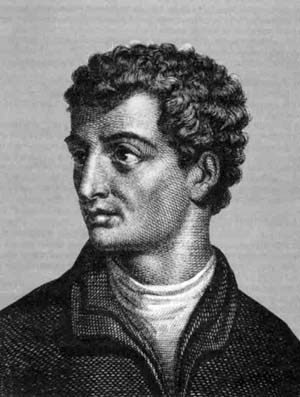
When we think liberal arts in education and the concept of the "Renaissance Man," Battista was the original. His influence on the Italian Renaissance can't be under stated.
Under the guidance of the men of the Renaissance, Italy (or at least its city-states) was the America of the 20th century.
Friday, August 13, 2010
The Engineering Mind Of Gaetano Crocco

1912, he realized the first italian experimental wind tunnel, followed soon by a second one, and finally by a third, specially used for high wind speed (up to 200 km/h) till WWII...
During the long university career (1926-1952), Arturo CROCCO published more than 170 scientific studies, he got 30 patents and invented 50 different aeronautic instruments, many of them are still used today in the field of the aircraft flight stability...
In 1934,he was named Chief Engineer for the building of the new “aeronautic” city of Guidonia, which was the centre of Italian flight studies, researches and experiences and, at that time, one of the most advanced in Europe. He died in Rome on 19thJan 1968.
(Crocco) deeply investigated the hydrodynamic effects of the speed on the hulls and the submerged surfaces of the boats. As a consequence, during the period from 1905 to 1907, he built, with RICALDONI, the experimental boat “Idroplano“ or “Barchino Idroscivolante”, equipped with two “V” dihedral steel foils to lift the boat out of the water and aerial propellers to push it, a true ancestor of the modern hydrofoils.
Crocoo was, in addition, a scientist. He was quite the expansive individual.
Sunday, August 8, 2010
Beyond Evil There's Good
I discuss this story more at my other blog, but felt it should be posted here as well. It's the story of how Italians risked their lives in saving thousands of Jews during WWII and was written by a social worker at Montreal's Jewish General hospital.
In particular, it mentions the names of a few "heroic" Italians like Giorgio Perlasca who was honored at the hospital. Sometimes we remember the stories but not the names who gave the stories its humanistic value.
From time to time, it's good to veer off a blog's track and honor special human interest stories.
In particular, it mentions the names of a few "heroic" Italians like Giorgio Perlasca who was honored at the hospital. Sometimes we remember the stories but not the names who gave the stories its humanistic value.
From time to time, it's good to veer off a blog's track and honor special human interest stories.
Wednesday, July 21, 2010
Niccolo Fontana Tartaglia: Forgotten Mathematics Genius

Read more about this remarkable, albeit forgotten, person here.
Oh before I forget. He was born and died poor.
"In the Renaissance Italy of the early 16th Century, Bologna University in particular was famed for its intense public mathematics competitions. It was in just such a competition, in 1535, that the unlikely figure of the young Tartaglia first revealed a mathematical finding hitherto considered impossible, and which had stumped the best mathematicians of China, India and the Islamic world.
Niccolò Fontana Tartaglia was a poor, self-taught mathematician, often referred to as “The Stammerer” for a speech defect he suffered due to an injury he received in a battle against the invading French army. He was an engineer known for designing fortifications, a surveyor of topography (seeking the best means of defense or offense in battles), and a bookkeeper from the Republic of Venice.
But he was first and foremost a mathematician. He distinguised himself by producing, among other things, the first Italian translations of works by Archimedes and Euclid from uncorrupted Greek texts (for two centuries, Euclid's "Elements" had been taught from two Latin translations taken from an Arabic source, parts of which contained errors making them all but unusable), as well as an acclaimed compilation of mathematics of his own.
Tartaglia's greates legacy to mathematical history, though, occurred when he won the 1535 Bologna University mathematics competition by demonstrating a general algebraic formula for solving cubic equations (equations with terms including x3), something which had come to be seen by this time as an impossibility, requiring as it does an understanding of the square roots of negative numbers. In the competition, he beat Scipione del Ferro, whose had coincidentally produced his own solution to the cubic equation problem. Although del Ferro's solution perhaps predated Tartaglia’s, it was much more limited, and Tartaglia is usually credited with the first general solution."
Lodovico Ferrari, along with Geralamo Cardano, were also an important individual in the development of modern mathematics. Both, incidentally, were engaged in a feud with Tartaglia. From Story of Mathematics:
"Tartaglia’s definitive method was leaked to Gerolamo Cardano, a rather eccentric and confrontational elder mathematician. Cardano published it himself in his 1545 book "Ars Magna" (despite having promised Tartaglia that he would not), along with the work of his own brilliant student Lodovico Ferrari. Ferrari, on seeing Tartaglia's cubic solution, had realized that he could use a similar method to solve quartic equations (equations with terms including x4).
In this work, Tartaglia, Cardano and Ferrari between them demonstrated the first uses of what are now known as complex numbers, combinations of real and imaginary numbers of the type a + bi, where i is the imaginary unit √-1. It fell to another Bologna resident, Rafael Bombelli, to explain, at the end of the 1560's, exactly what imaginary numbers really were and how they could be used.
Although both of the younger men were acknowledged in the foreword of Cardano's book, as well as in several places within its body, Tartgalia engaged Cardano in a decade-long fight over the publication. Cardano argued that, when he happened to see (some years after the 1535 competition) Scipione del Ferro's unpublished independent cubic equation solution, which was dated before Tartaglia's, he decided that his promise to Tartaglia could legitimately be broken, and he included Tartaglia's solution in his next publication, along with Ferrari's quartic solution.
Subscribe to:
Posts (Atom)
