I think I've settled on a cappuccino machine. My Saeco is eight years old and has served me loyally with very little problems but it's time for a change.
At the moment, Gaggia (the maker of the first modern steamless machine) is the one I'm looking to switch to. Keep you posted.

Because Italy is more than a geographic expression..

Saturday, September 11, 2010

Thursday, September 9, 2010
Osella Squadra Corse

Fellow Canadian Allen Berg was also part of the Osella universe.
Not sure where the company ended up. Sounds like every other manufacturer: In the arms of Fiat.
Pic from Nuvolari.com
Monday, September 6, 2010
A Revolutionary Instrument This Piano
Bartolomeo Cristofori. He who invented an instrument we call the piano. Or as he called it, "piano e forte."
How Many Volts?
Alessandro Volta's corrosive invention was the battery.
What, you think the word 'Volt' came out of a Wagner opera?
What, you think the word 'Volt' came out of a Wagner opera?
Seeing Things Better
Prior to the late 13th century, generally, eye glasses came with no arms settling on the bridge of the nose instead. Salvino D'Artmate is credited with having invented the eye glass. Although it has been asserted Alessandro Spina may have in fact been the first to do so.
From Richard D. Drewery., MD:
In 1289 in a manuscript entitled Traite de con uite de la famille, di Popozo wrote: "I am so debilita-ted-by age that without the glasses known as spectacles, I would no longer be able to read or write. These have recently been invented for the benefit of poor old people whose sight has become weak". Thus it appears that the first spectacles were made between 1268 and 1289. In 1306 a monk of Pisa delivered a sermon in which he stated: "It is not yet twenty years since the art of making spectacles, one of the most useful arts on earth, was discovered. 1, myself, have seen and conversed with the man who made them first". The name of the true inventor of eyeglasses remains lost in obscurity.
After this, as is usually the case, many inventors and innovators from other parts of Europe - notably England - improved eye glass wear.
For their part, Italians have remained at the forefront of eye glass technology over time.
As of yet, I only wear sun glasses - another area Italian designers excel in. Actually, I wear Arnette. I have somewhat of a small frame so most sun glasses tend to overwhelm my face (decorated with delicate but distinct features - ahem) but my Arnette's fit perfectly. Not sure where Tommy Arnette was born though.
Saturday, September 4, 2010
Weaponry
The Villar-Perosa was arguably the first submachine gun having made its entrance as an immobile weapon created during WWI in 1915. It was created by Bethel Abiel Revelli.
Another gun manufacturer, Franchi focuses on shotguns.
Franchi is currently a subdivision within the Benelli group.
Another gun manufacturer, Franchi focuses on shotguns.
Franchi is currently a subdivision within the Benelli group.
Wednesday, September 1, 2010
Grand Prix Moto Stats
Being a little bit of a stats geek, I took a look at how Italian motorcycle teams have done at the MotoGP world championships. They stack up pretty well:
 |
| MV Agusta: Most capped Italian bike |
In terms of drivers, Italy leads all nations (combining 500cc, 350cc, 2/250cc, 125cc, 80cc/50cc) with 75 total wins. Great Britain is next closest with 44 and Spain at 32. Japan, who do well in constructors, have only eight winners.
In constructors, Japan has won 118 titles between Honda, Kawasaki, Yamaha and Suzuki. Italy is second with 91 titles won by MV Augusta, Moto Guzzi, Aprilia, Ducati, Gilera, Mondial, Benelli, Minarelli, Morbidelli, MBA, Bimota, Motul Bultaco.
Constructors is essentially a two-country battle between Japan and Italy. Germany is third with 13 titles (incidentally with no driver winners) and Spain with 11.
Italy is working on a 75/91 ratio.
Japan 8/118.
Great Britain 44/7.
Spain 32/11.
United States 17/2.

Cancer Research Breakthroughs
Dr. Antonio Giordano is leading the way in searching for cures for heart disease, diabetes and cancer. Video at Redorbit.
Tuesday, August 31, 2010
Made In Italy, Not China
I was talking with my cousin who was in town for a week. He's from Calabria and currently resides in France while maintaining a residence in Rome as well.
We were talking about, well, European life and society. Lotsa interesting tidbits too numerous and intricate to name and recount here. One thing that was interesting was France's unbelievable interventionism. He owns a counter-restaurant in a Parisian market where, among other things, he has to pay 500 euros (a year I believe; could be month) to operate a radio.
Sometimes I wonder how far behind North America is.
The other issue we discussed was the Italian consumer. Apparently, in Italy, Italians do not touch 'Made in China' products. To them, that's a line they will not cross. Which, I suppose, in part, explains why SME's and artisans continue to thrive as viable businesses in Italy since they have resisted the temptation to "outsource" their brands and manufacturing to China. Italians have spent centuries mastering their arts and luxury products. They're not about to let that disappear it looks like.
Saturday, August 28, 2010
Marchionne: The Mazzini Of Business
FIAT CEO Sergio Marchionne is conducting a radical experiment in Italy: Increase productivity.
But he's facing resistance.
''In Italy we are afraid of change,'' he said in a speech at a conference in Rimini. ''We are not in the1960s any more,'' he added, stressing that it was necessary to stop seeing the world as a ''fight" between capital and labour, owners and workers.
''While we still have the old outlooks weighing us down, there'll never be space for new horizons''.
The situation he describes may be more challenging in Italy but I get the feeling the same narrative is gripping the United States these days.
Marchionne is a refreshing, vibrant face of Italian business. He may very well be the "soul of Italian business" just as Giuseppe Mazzini was the "soul of Italy" during the Risorgimento.
Ciocc Bikes
Italy is the land of bicycles.
Ciocc is just one of many bicycle artisans.
As I mention from time to time, one day Italian companies will hopefully be as perfectionist with website language in English as they do their masterful products.

Ciocc is just one of many bicycle artisans.
As I mention from time to time, one day Italian companies will hopefully be as perfectionist with website language in English as they do their masterful products.

Thursday, August 26, 2010
SME's Drive Italy's Economy
I was perusing the net to see if I can find anything discussing the Italian business model. I really need to renew my library card so I can hit primary sources and periodicals. Anyway. This research report by Daniela di Berardino at the University of Pescara (Department of Business Studies) titled Marketing in Small and Medium Enterprises:
Disclosed is only the summary (with tiny grammatical corrections) as the paper is on word doc. But is easily found on Google:
"Small and medium enterprises are the typical business model of the Italian entrepreneurial system and a lot of these SME are family business. In Italy the 80% of working people are into SME, instead in the UK the 55%, in France the 67%, in Germany the 60%, in Spain the 79%.
More than 95% of all European enterprises belong to the SME size. The 55% of these SME in Europe was born between 1951 and 1970 years, the economic boom period, and a lot of them became medium firms.
The Sme’s features are: narrow management (one or more persons); small task environment; resources, equity and human capital assigned by propriety.
The Italian experience shows that the SME:
- can obtain relevant competitive advantage into the bound task environment;
- can make success into the large market by the focus or niche strategy or by the partnership with other firms (big or small);
The competitive advantage that SME can obtain in the large markets requires these conditions:
- No economy of scale;
- High flexibility;
- few big companies;
- fragmented market.
During the last ten years many events threatened the SME: globalisation, outsourcing, enterprises’trust, brief product life cycle, consecutive innovation.
However, the SME are able to change their organizations, manufacturing and process with more flexibility than global players and during the last years many SME opened their market to the foreign customers, especially in the country in growth. The tools used for this purpose are the relationship with foreign partner and internet, thought that the Italian SME doing e-commerce, e-procurement, global promotion and market penetration into the foreign markets. A lot of them have an internet web site where presents their product, their history, their distribution system, the price and other but few of SME, in Italy too, use internet channel for value generation.
The main relationship built with big enterprises are franchising and supply chain relations (to support the growth and the market penetration), licensing and joint venture (to support the innovation, the product development, the leaning organization, to receive financial resources), and other concracts. Greater cooperativeness, sense of community, innovation, strategic flexibility and core competence are necessary to SME’s growth and competitiveness. We can try these features into the network systems, where economic exchange is embedded inside a network of social and trust relations. Trust is necessary to create cooperation and value by the relations. The economic effects, largely, are low cost, learning, market penetration and growth of management competencies.
The main objectives of european SME, usually, are the sales growth and hight return on equity. The Italian core industry is the mechanical, especially in the North East. This industry is composed by tools and machinery for other industry, while textile industry, clothing factory, leather industry, shoe factory, and only the 9% of these SME has the 20% of sales by one client. These SME have many relations with suppliers and retailers to support their growth.
The Italian SME are much focused and produce speciality goods for the consumer market. These SME prefere niche strategies, focus on core competencies, differentiated goods and service, support more quality than price competition."
Tuesday, August 24, 2010
Roots: Leon Battista Alberti
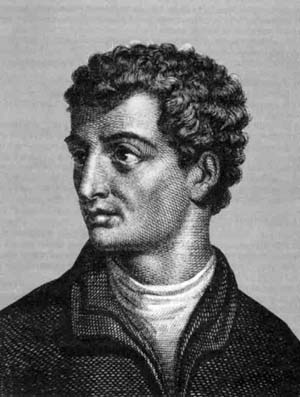
When we think liberal arts in education and the concept of the "Renaissance Man," Battista was the original. His influence on the Italian Renaissance can't be under stated.
Under the guidance of the men of the Renaissance, Italy (or at least its city-states) was the America of the 20th century.
Subscribe to:
Posts (Atom)